How Kalfire turned patents into a growth engine
When gas sales plummeted and regulations tightened, most fireplace companies struggled to keep the flame alive. But for Kalfire, it was the spark of something new. CEO Beijko van Melick saw disruption not as a threat—but as a cue to innovate.
Founded in 1981 as a family-owned fireplace manufacturer, Kalfire has since evolved into a global leader in atmospheric, design-led fire solutions. Its transformation from traditional manufacturer to technology innovator was fuelled by a powerful strategic tool: patents.

From idea to IP: building value through patents
In the early days, Kalfire pioneered the now-common "room divider" fireplace, but lacked the know-how to protect the design. Later, their breakthrough gas fire with ceramic logs was a global hit—until competitors replicated it. "We patented it, but not correctly," says Beijko. "That mistake was expensive."
Determined not to repeat it, Beijko turned to EP&C Patent Attorneys. Through a referral from Spark Innovations during the development of Kalfire’s revolutionary E-one fireplace, he met patent attorney Thomas Remmerswaal—and everything changed.
"Thomas is like a pit bull," Beijko says. "He never lets go. He knows everything about fire technology and gives strategic advice on how to make patents stronger."
Patents powering innovation
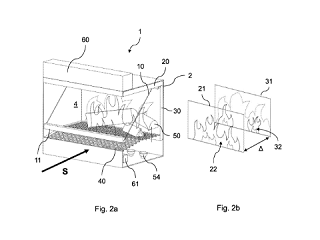
The E-one, a holographic fireplace that requires no flue or gas, was born from a bold idea: make fire accessible to everyone, anywhere. With urbanisation and sustainability in mind, the E-one’s mission was to offer authentic fire ambience in homes without chimneys or gas connections.
Kalfire developed the concept with Spark Innovations and a team of scientists from Shell and Philips. Even before a working prototype, EP&C was involved. “Patentability came first,” says Beijko. “If it couldn’t be patented, I wouldn’t have invested.”
The result was a suite of patents covering elements like dual-layer LED displays, proprietary projection angles, and light filtering techniques—creating a realistic flame effect unseen elsewhere. EP&C helped guide every stage, from concept to filing strategy.
A new business model emerges
Armed with strong IP, Kalfire pivoted. Licensing technology—rather than building and selling every unit themselves—became the new frontier. “We started licensing two years ago. Now it’s 20% of our turnover—and pure margin,” says Beijko.
Markets like the US, China, and Australia are too large or complex to serve directly. Through licensing, Kalfire monetises its inventions while partners manage local distribution. “Without a patent, there’s no licence fee. That’s why IP is crucial.”
The shift didn’t stop at holograms. Kalfire’s latest innovation combines bioethanol and paraffin for cleaner, more dynamic flames. Another IP-backed invention—a near-silent electric fan—targets mass-market electric fireplaces globally.
From defence to strategy
Beijko admits he once saw patents as a defensive tool. Today, they are central to his growth plan. “We’ve moved from protecting products to selling ideas. Patents aren’t just protection—they’re opportunity.”
Key to this evolution is Thomas from EP&C. Far from a box-ticking lawyer, Thomas acts as an embedded advisor—helping Kalfire assess competitors, extend patent lifespans, and shape ideas for maximum impact. “He’s involved from the start, not the end,” says Beijko.
EP&C even conducts quarterly scans of industry patents, flagging competitor activity and identifying gaps. Together, they build patents with longevity—adding improvements over time to prolong protection.

Innovation is a team sport
At Kalfire, innovation and IP aren’t limited to R&D. Their New Product & Innovation process begins with strategic planning, testing assumptions with prototypes, and checking patent potential before heavy investment. The entire company, from engineers to cleaning staff, contributes to quarterly strategy days and company-wide planning.
This integrated culture ensures innovation isn’t siloed—it’s shared. “It’s not about me,” says Beijko. “It’s the whole team.”
Strategic resilience in a changing world
Geopolitical shocks, the Dutch gas phase-out, and COVID all reshaped the market. Kalfire’s gas fireplace sales dropped by 60%, falling from 15,000 to just 3,000 balanced flue units sold. Yet these pressures didn’t crush the business—they prompted reinvention.
“Our mission became to connect people through sustainable fire,” says Beijko. “That’s when we built our management team and began tying strategy to every level of the company.”
With structured planning, bold investments, and a strong IP foundation, Kalfire future-proofed its business. The result: a company as much about technology as design, licensing as much as manufacturing.
Key takeaways
- Strong patents enabled Kalfire to create a licensing business worth 20% of turnover
- Collaboration with EP&C transformed IP from reactive defence to strategic growth
- Embedding patent thinking early in product development improved protection and longevity
- Innovation and IP are part of the entire organisation—not just the R&D team
Kalfire’s story proves that IP can do more than protect products. With the right partner, it can unlock entirely new business models—and keep the fire of innovation burning.