SAIA takes tomato plants to a robot instead of the other way around
Robots in greenhouses are no longer a novelty but a machine that takes plants to a robot instead of the other way around most certainly is! SAIA has developed a system whereby plants are removed from the greenhouse for the leaves to be pruned and the tomatoes to be harvested. Bart van Tuijl came up with this smart solution with his partner Ruud Barth and together they founded SAIA. Bart explains how the machine works and how patents help to protect the innovation.
Robots can't always do the same things as humans
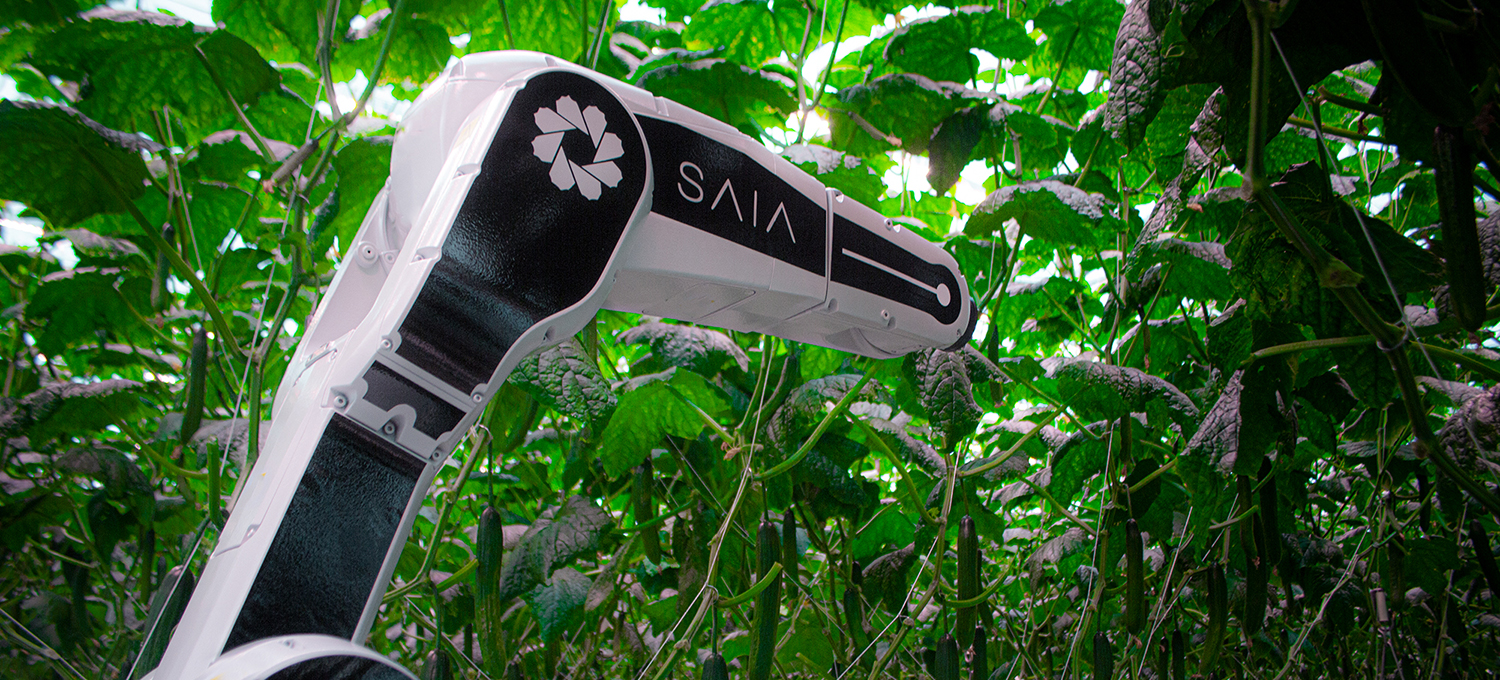
The growing labour shortage is a major problem in the horticultural sector. That is why a number of companies are working on harvesting robots. This doesn't always work however as Bart explains: "It is virtually impossible to build a machine that is able to work in the narrow spaces between tomato plants. Robots don't have the same flexibility required as humans and are not able to perceive their surroundings the same way humans do."
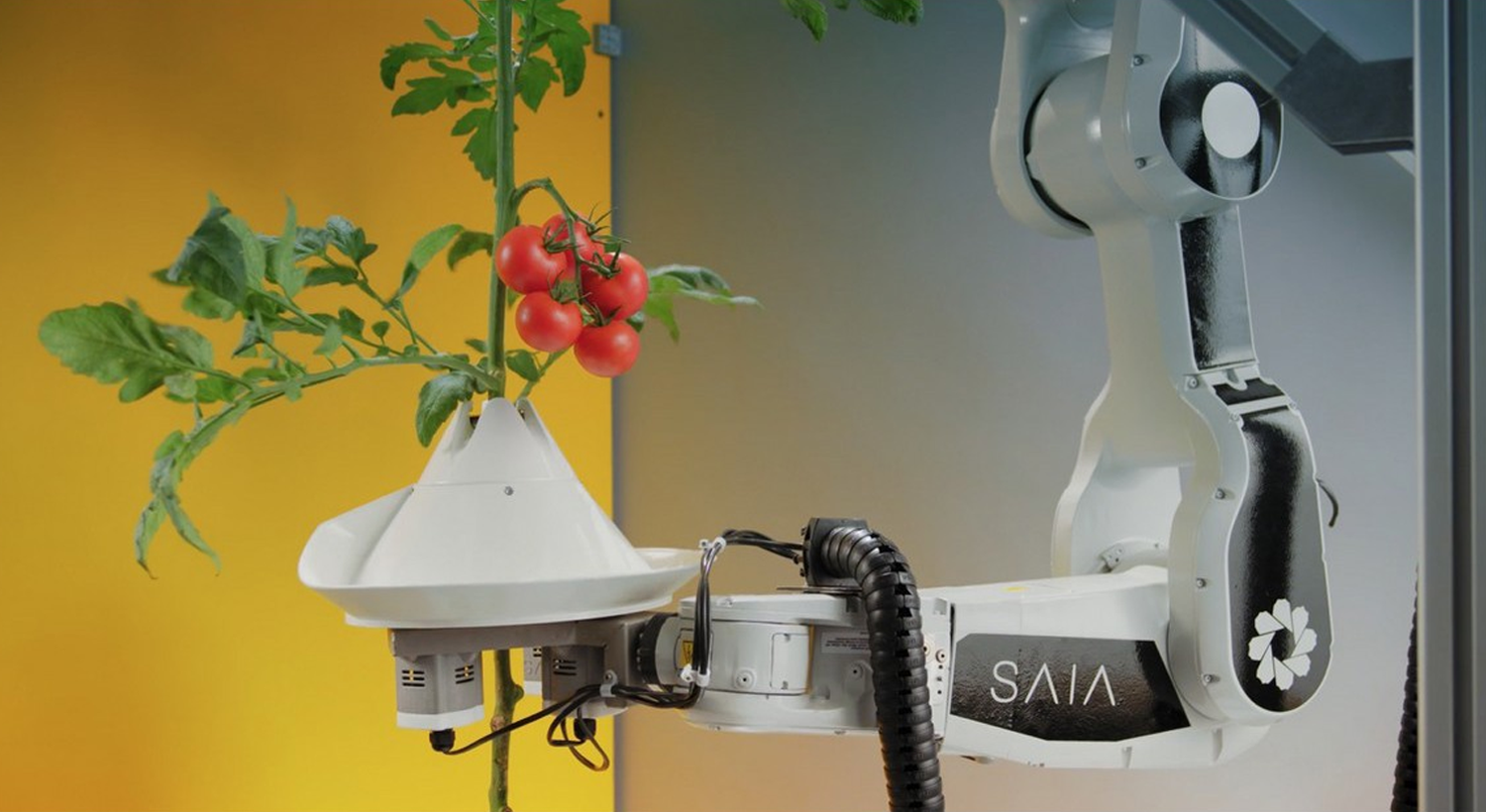
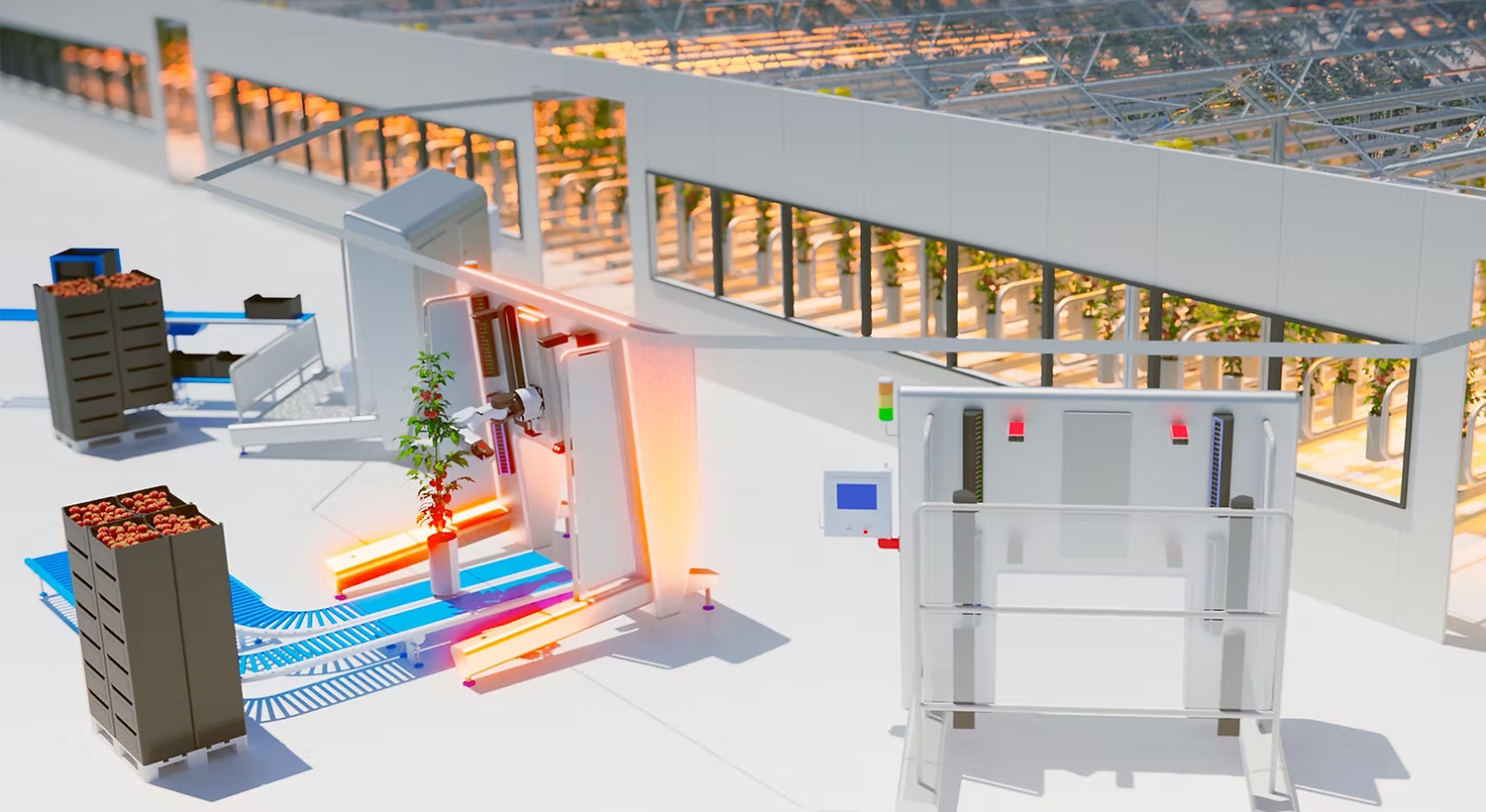
That is why SAIA opted for a different route. Bart and Ruud were inspired by the dairy industry where cows come to the milking robot. "Our machine removes tomato plants from the greenhouse every week and takes them to the robot. The plants first pass through a scanning station with cameras which measure the ripeness level and the height of the vine tomatoes. The plants then pass through the harvesting robot which strips the vine and leaves from the plant stem. You only need one robot per hectare for this whereas in the case of mobile robots in a greenhouse you would need many more per hectare."
Valuable data about the plants
The machine delivers more than just automation. "Each plant is given a unique identifier which allows us to link a lot of data to individual plants. This forms the perfect database for controlling the climate or making harvest forecasts, for example. We keep track of how many kilos of tomatoes each plant produces which then enables us to create a new variety from the top 5% of plants or remove the lowest 5%, for example."
Contributing to the future of greenhouse horticulture
How does SAIA's innovation contribute to a better world? This has to do with its contribution to the raison d'être of Dutch greenhouse horticulture which is more sustainable than traditional open cultivation. In a closed environment water can be reused, biological pest control can be applied and pesticides can be used in a very targeted manner per plant.
Bart explains: "Southern Spain is a major producer of tomatoes in open cultivation. There is a lot of plastic pollution there, a lot of pesticides are being used and natural water sources are being depleted. Greenhouse horticulture in the way that it is done in the Netherlands is much more sustainable. Its disappearance due to a lack of labour would therefore be a major blow. Our machine makes it possible to keep greenhouse horticulture going, even when there is no staff available."
Patents offer protection against espionage
SAIA has filed patent applications in various areas. The technology of the robot tools and the cultivation system, as well as the process of smartly selecting and moving groups of plants in the greenhouse, have all been patented. Bart explains why. "The patents naturally protect against counterfeiting. But for a start-up they also help to attract investors. On top of that they tell partners that we are working on an interesting technology and are a party worth working with."
End of the road?
For a while it looked like SAIA would not be able to obtain a patent for its cultivation system. "Thomas at EP&C helped us with literature research in patent databases to patent our cultivation system. He found some very old patents that actually already described what we are doing. At that point, we thought: "That's it, we can't get a patent," says Bart. "But Thomas helped us to describe the innovation from new angles so that we were able to patent it after all. It's great to work with someone who quickly understands what you're talking about."
EP&C contributes to a more sustainable future
At EP&C we are about more than just patents. We want to contribute to a healthy future and a better world. SAIA fits in with that. Their technology makes greenhouse horticulture more efficient and offers a more sustainable alternative to traditional open cultivation. The better we look after people and the environment now, the longer we can continue to do what we love - work with forward-thinking entrepreneurs.