
Transferring a patent or design right sounds duller than the inventions we usually cover here. But it matters if you hold these rights and want to sell them, or if you're acquiring a business that owns them. Here's how it works.
When patents get transferred
Patent and design rights can be applied for in the name of a company as well as in the name of a private individual. They may also be registered in several names at the same time. Once they have been filed the holder of these rights is free to transfer or sell them at any time. They might decide, for example, to:
- Sell their patent or design rights to someone else
- Sell their patent or design portfolio to someone else
- Sell their business to someone else
- Set up a company around an invention which originated in a private capacity
- Change their business structure.
The latter is a fairly common reason for a transfer of rights. For example, when a business develops from a small start-up into a private limited company to which a holding company is sometimes also added. Such a change in business structure may be a good time to also transfer the patent and design rights to a separate private limited company.
What to watch out for
If you are transferring patent or design rights to someone else or if these rights are being transferred to you, then there are a number of things you will need to bear in mind:
- A simple deed of transfer will suffice as long as it states that party A is transferring patent/design right X and all rights arising from it to party B.
- The deed of transfer does not need to contain sale prices or any other special agreements as this is something the competition does not need to know about.
- The transfer needs to be signed by both parties for it to be legally valid.
- Don't forget the priority rights if the application was filed recently. Without them, a follow-up application by the new holder can be declared invalid.
Registration isn't compulsory, but it's usually wise
All patent and design rights can be found in official national patent or designs registers. In the case of Dutch patents, for example, this is the Dutch Patent Register. This register not only contains information about what the protected invention or innovation consists of, but also who the holder of the right is, and whether the right is still in force.
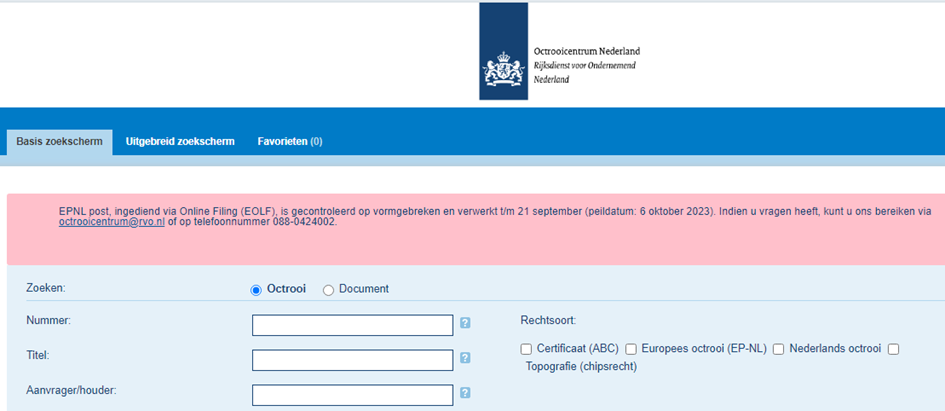
Oddly enough, when a right changes hands, registering the deed of transfer isn't mandatory. It's usually a good idea anyway, and for third-party effect it's actually required.
It is nevertheless often advisable to do so, and for so-called third-party effect it is even a requirement. After all, should a competitor infringe, either knowingly or unknowingly, then the patent or design right holder reserves the right to take action against this. And the competitor in question must then be able to find out who this right holder is in the official register.
For example, I was once able to quite easily parry an infringement accusation for a client because the accusation letter was sent on behalf of a party that could not be found in the patent register. As a courtesy, I then sent a short note to the patent holder listed in the register saying that someone else was making unsubstantiated accusations under their patent.
Incidentally, the registration of a deed of transfer in the official patent or designs registers is not free of charge. The costs generally amount to a couple of hundred euros.
I hope that sheds some light on a less glamorous corner of my profession. Any questions? Get in touch.