This is a question we often hear from entrepreneurs exploring ways to protect their intellectual property. Many of them are looking for alternatives because patent protection is either not an option or too expensive. This is where design rights can offer a solution. Registering a design is relatively affordable and provides valuable protection throughout the European Union. But how does design registration work, what exactly does it protect, and, of course, what are the costs involved?
What are design rights?
By registering a design, you obtain a registered design right. A smart way to protect the appearance of your products throughout the European Union. Design rights are a form of intellectual property protection that focuses on the visual appearance or design of a product.
Think, for example, of the distinctive appearance of a piece of furniture, packaging or an electronic device. It is not just the technical functionality that matters. The shape, lines, colours and other visual features can also contribute to a product's distinctive character. By registering these design features, you can protect the appearance of your product against copying.
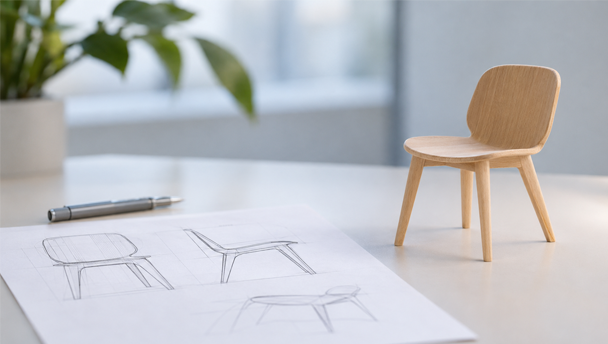
Design rights are therefore different from patents, which protect the technical aspects of an invention. With a design registration, you protect the external appearance of both two- and three-dimensional designs. The appearance of a specific part of a product may also qualify for protection.
Examples of products and designs that may be suitable for design protection include:
- Consumer products
- Packaging
- Furniture
- Vehicles
- Electronics
- Building materials
- Tools
- Industrial designs
Europe or Benelux: how much does design registration cost?
One of the advantages of design rights is that they are relatively affordable compared to other forms of intellectual property protection. Moreover, a single EU design registration can protect your design in all member states of the European Union.
It is not possible to register a design exclusively for the Netherlands. However, you can opt for a Benelux design registration, which provides protection in the Netherlands, Belgium and Luxembourg.
Another option is an EU design registration. With a single application, you can obtain protection throughout the European Union. This can be particularly interesting if you intend to sell your products beyond the Netherlands or want to prevent competitors from marketing similar designs in other EU countries.
The costs of design registration consist of official filing fees and any professional fees charged by a design attorney. For an EU design registration, a basic filing fee applies to the first design. If you want to register multiple designs or variations, additional fees will apply.
An initial registration provides five years of protection. After that, you can renew your design right in five-year periods, up to a maximum of 25 years. Each renewal involves an additional fee.
The exact cost of design registration therefore depends on the number of designs, the geographical scope of protection and the approach you choose.
EP&C can help you evaluate these options and provide a clear overview of the costs in advance. We look beyond the registration itself and focus on the protection your design actually needs.
How can you use design rights?
Protecting your intellectual property is always a valuable investment. It strengthens your market position and helps prevent competitors from benefiting from your creative efforts by introducing similar designs.
Design rights can be used in two different ways: offensively and defensively.
A well-known example of an offensive strategy is Apple. The company carefully considers the scope of its design protection by registering various elements and visual features of its products separately. Think of the distinctive appearance of a smartphone or specific details of its housing.
By registering these design features, a company can take action against competitors whose products create the same overall impression on the informed user.
A defensive strategy, on the other hand, allows you to protect your own product against copying at a relatively low cost. A design registration makes it easier to demonstrate which visual features you have protected and which rights you can enforce.
With a registered EU design, you can take action against infringement throughout the European Union. This allows you to protect not only your design, but also your market position.
Design rights and online marketplaces
An increasingly important advantage of design rights is the ability to combat counterfeiting and copying on webshops and online marketplaces.
Many popular consumer products are copied by competitors who offer imitations through platforms such as bol and Amazon.
If you hold a valid design right for the original product, you can use it to support a complaint about potential infringement. Major online platforms have procedures that allow intellectual property owners to report products that may infringe their rights.
A registered design can be a valuable tool in this process. After all, you can refer to an official registration that clearly identifies the visual appearance protected by your design right.
However, this does not mean that every similar product will automatically be removed. Whether infringement has occurred depends, among other things, on the scope of protection of your design and the overall impression created by the other product.
A well-prepared design registration can nevertheless make it considerably easier to take action against copying.
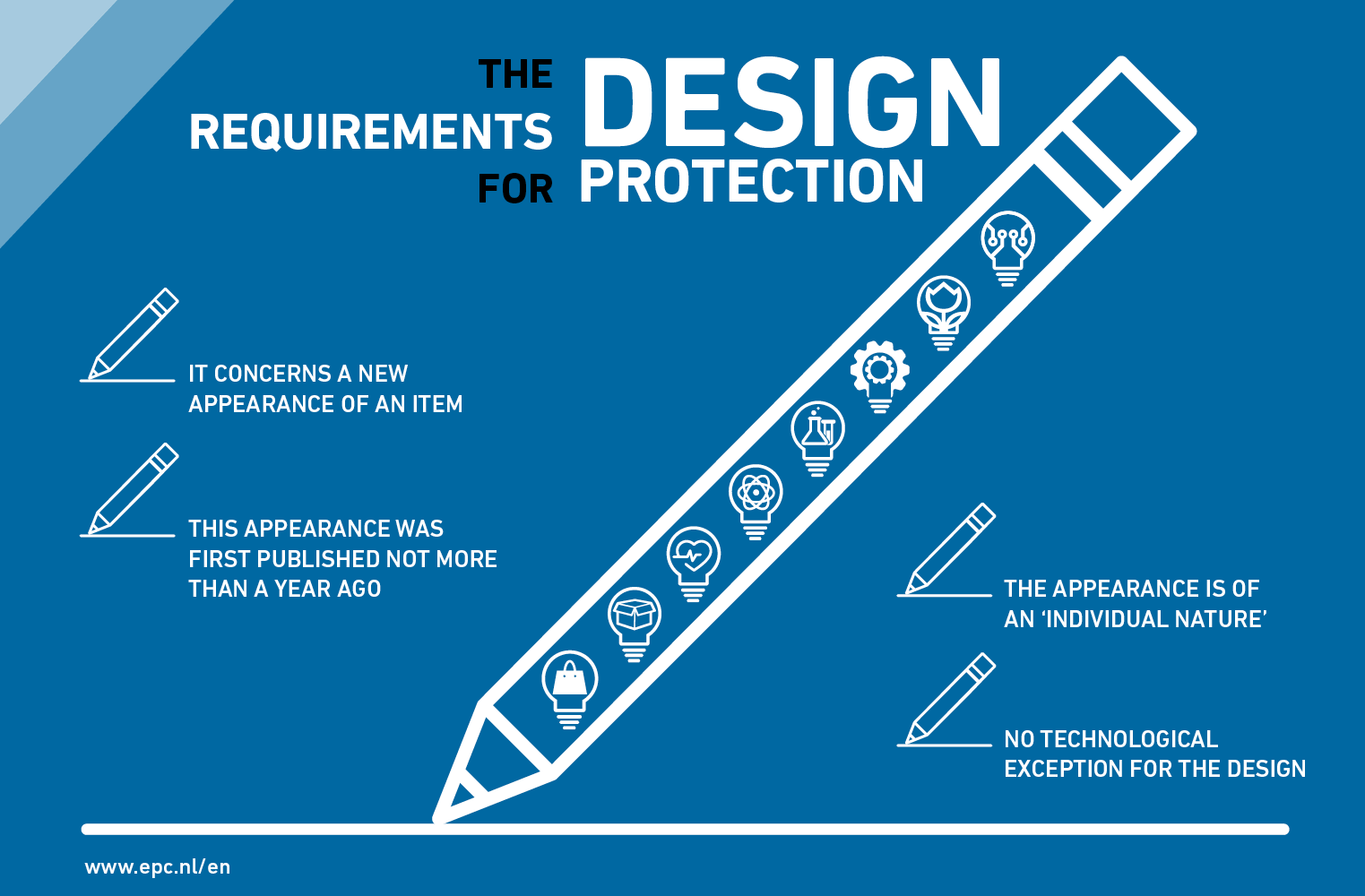
Requirements of design protection
European design law has been modernised to better reflect developments in design and digitalisation.
The updated legislation offers greater opportunities to protect digital designs, including graphical user interfaces and animations. The rules governing design applications and the associated fee structure have also been revised.
In addition, greater emphasis has been placed on protecting designs against new forms of counterfeiting, for example when 3D printing technology is used to reproduce products.
For businesses, this means that design protection is no longer relevant only to traditional, physical products. When developing digital applications, it may also be worth exploring which design features are eligible for protection.